


 Bodno A10From $995
 Bodno A20From $1,595
 Bodno A30From $1,995
 Bodno A40 ProFrom $2,995
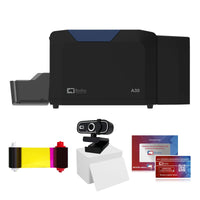 vs.
vs.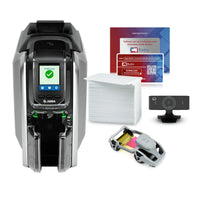

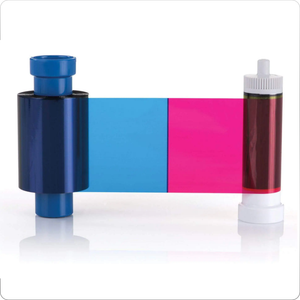
 CR80 30 mil PVC cardsFrom $3.99
 Adhesive-backed PVC cardsFrom $9.99
 Proximity cards (NoMativ)From $14.99
 NTAG NFC cards, 100 packFrom $59.00
 Buy the softwareDesign and print ID cards on PC and Mac

Your Cart is Empty.
Let’s Find Your Perfect Printer!
Free Shipping on Orders of $100 or More

Free Shipping on Orders of $100 or More
Used by 75,000+ businesses
Lifetime expert support included
Over 50 million cards printed
Your Cart (0)
Your Cart is Empty.
Let’s Find Your Perfect Printer!
Updated October 9, 2026
The R330 and R660 print onto a clear film first, then bond the film to the card. That is what makes edge-to-edge prints on chip cards possible, and it is also where most of their problems come from: the film itself, the transfer settings, or the card surface. These are the fixes that solved the R-Series cases in our support records.
Error 73 (film missing): reseat the film holder, check the film is wound the right way, then try a new roll. Print not sticking, or edges scratch off: switch retransfer to User defined, lower speed by 2, raise temperature by 2 (never past 3), and wipe chip cards with alcohol before printing. Streaks or lines: turn on Rotate 180°, then adjust Take end, Supply end and Print one at a time (leave Retransfer alone). Error 51 (auto feed): fan the cards, check the thickness setting and press the stack down. Keeps restarting: see the power guide.
Open the printer, lift out the retransfer film holder and seat it again until it sits fully in its guides. Close the cover gently.
The film should be wound straight and snug, in the same direction as when it came out of the box, with no slack or creases. Loose or reversed film reads as missing.
If a new roll of 79051 retransfer film clears the error, the old roll was the problem. If it does not, contact us with a photo of the film installed.
Restart the printer first. If the screen still does not respond to touch, contact us. Do not open the printer.
The usual pattern: prints fine on plain PVC cards, but on chip cards the edges do not print fully and the print scratches off with a fingernail. Often it starts after changing to a new ribbon and film. The fix is more heat and more time in the transfer step, in small amounts.
Print one card and scratch-test the edges. Still lifting? Raise the temperature to +3 and no further. If it still lifts at +3, lower the speed further instead (−3, −4) rather than adding more heat.
Chip cards can carry residue on the surface that stops the transfer bonding. Wipe the print surface with isopropyl alcohol and let it dry fully before printing.
Seaory's limit for retransfer temperature is +3. Going past it is not the fix for poor bonding. Slow the speed instead, and contact us if that does not do it.
Print a test card first. If it shows the same lines, work through these two steps in order.
Print one test card. On the R330 and R660 this alone often clears the lines.
In the ribbon tension settings, adjust these three: Take end, Supply end and Print. Change one setting a few steps, print a test card, and look before you touch the next. If a change makes the lines worse, set it back and go the other way.
Leave Retransfer as it is. It does not need adjusting for streaks.
Set all three back to where they started and contact us with a photo of the test card and a screenshot of your tension settings.
The printer feeds a single card fine but not a full stack. Check in this order:
Most support cases take an extra day only because we have to ask for these. Attach them up front and we can usually give you the next step the same day.
Guide prepared with Seaory after-sales engineering from real Bodno support cases. Updated October 9, 2026. Applies to Seaory R330 and R660 sold by Bodno.


